About my mom
It's about time for me to make meaning out of my mom's life

Conclusion first: My mother is dying. Not in the “yeah, yeah, don’t bother me,” way all of us are dying, but in the “stage four colon cancer” way. She’s at home with my dad and a live-in nurse. She’s not in pain. She’s comfortable and healthy for an 88 year old cancer patent with Alzheimer’s disease. Things could be much worse.
All those statements are facts — 88 years old, stage 4 cancer, Alzheimer’s. Now I have to make meaning from those facts.
My mother was born in New York City in 1936. She lived in Greenwich, Connecticut until she was about five when the family moved to Orlando, Florida so my grandfather could manage an orange grove the family owned and maybe get away from his domineering mother. I don’t really know why they moved. Only that they did. This is the fractal nature of facts, but I’m not the only one who has to deal with the different pictures one fact creates. Making meaning from facts is everyone’s problem.
No one knows for sure how the Moon was created. The leading theory is that it formed out of a collision when a Mars-sized protoplanet collided with Earth about 4.5 billion years ago. The story about the orange grove and the domineering mother has always been with me, just like the Moon as always been with me. Both stories explain most of the available evidence, but not all of it. We have Moon rocks to study to learn where the Moon came from. I have memory to learn the story of my mother, a much less solid substance.
My mom and I used to play golf together. She started playing in her early forties, and I took the game up shortly after when I was 12 or 13. We’d ride a golf cart together. She’d even let me drive. I think she preferred riding in a golf cart to walking because it kept us closer together. Not that she wanted to talk to me so much, though we did do that. When we walked I’d end up ahead of her in the fairway or the rough on a different hole after I’d sprayed my ball off the hole we were both playing.
When I got ahead of my mom on the course, she’d get nervous over her shot because she was afraid she might hit me with her ball, though she never did. Neither one of us could get the ball to go where we wanted it to. A profound inability to putt runs deep in our bones. My dad has the malady, too.
My mother is very competitive. Whenever I out drove her, I don’t remember her saying things like “Great drive.” It was generally more like, “I wish I could hit the ball that far.” These facts come from my memory, so they might be fictions and all made up. The emotional imprint these memories made and the feelings they rouse when I bring them to mind are the source of their meaning. The truth or falsehood of memory is irrelevant. The feelings associated with the memories are real and what matters. Thank god they evolve and change.
We are here and it is now. Further than that, all human knowledge is moonshine. - H.L. Mencken
That’s a dumb quote. We know quite a lot.
Light travels at about 300 million meters per second no matter where you are. It’s constant under all circumstances. That’s something we know. Does it mean anything? It means light has to cheat both time and space to always travel at that constant speed. It also means that “now” is relative to where you are.1 The light of memory travels at a constant speed, and it cheats both space and time. It’s the same for all of us, no matter where we are, but now is always relative.
When we look at the sky, we’re looking into the past. The light we see has to travel a long time to reach our eyes. My mother is both my past and my future. I see my childhood, adolescence, early adulthood, and maturity in her. I see what might be my future — cancer, Alzheimer’s, couch bound, surrounded by family and people trying to help her, in her own home, a home she loves. She’s a constant in my life, a constant I still don’t know the meaning of.
Lots of things have meanings I don’t understand. Japanese calligraphy is one of those things.
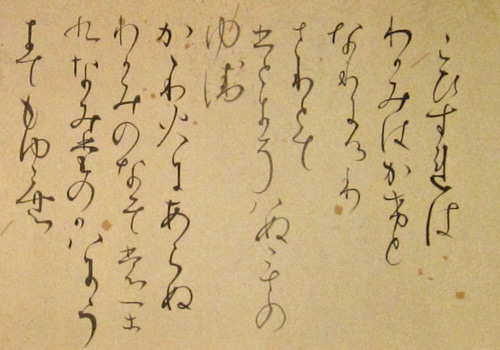
If I studied Japanese I might be able to discern what those lines mean. It’s also possible they have no meaning even when you understand Japanese.
My mother went to Mount Holyoke College, an all women’s school. She graduated in 1957. Those are facts that don’t have much meaning for me. I’m not sure they have much meaning to my mother. I might discover meaning if I studied those facts, just like if I studied Japanese calligraphy. I might also just make something up that has no relation to my mother.
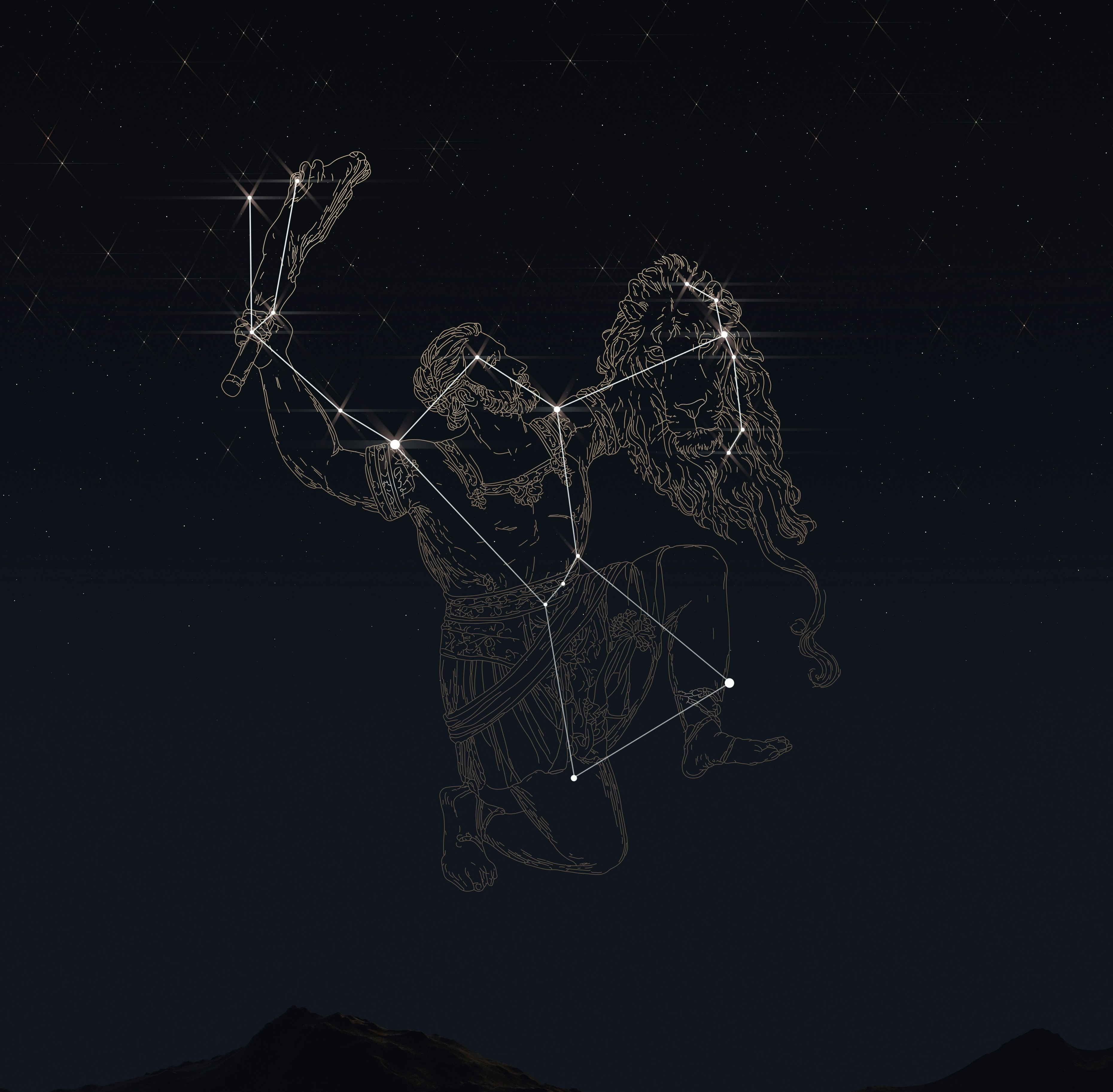
Most data is random noise. We layer meaning over it. Constellations are examples of how we take randomness and assign patterns to it. The night sky is an almost perfectly random arrangement of lights, but that doesn’t keep us from finding hunters, bears, and fish in it.
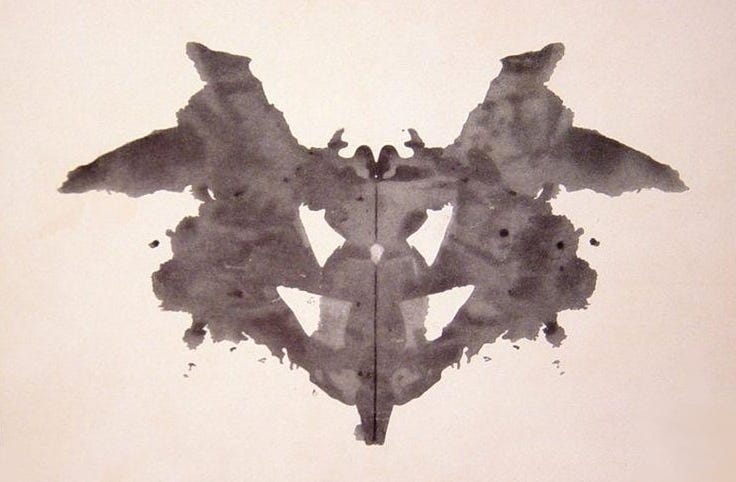
I have random memories of my mother that defy meaning. I haven’t found a pattern that connects them into something. The sound she made when she heard a friend had been murdered. Her penchant for using a counter top grill for pancakes and hash browns. How she looked in a swim cap doing water ballet. These are the Rorschach tests of my mind.
A Rorschach test is intended to measure how a person perceives the world and themselves. The idea is the subject projects meaning and significance onto the inkblot. The inkblot has no meaning itself. Mothers can be like inkblots, too.
Hermann Rorschach, the inventor of the Rorschach test, looks amazingly like my older brother Jamie when he was young. Does that mean anything? We have Swiss roots, and Rorschach was Swiss.
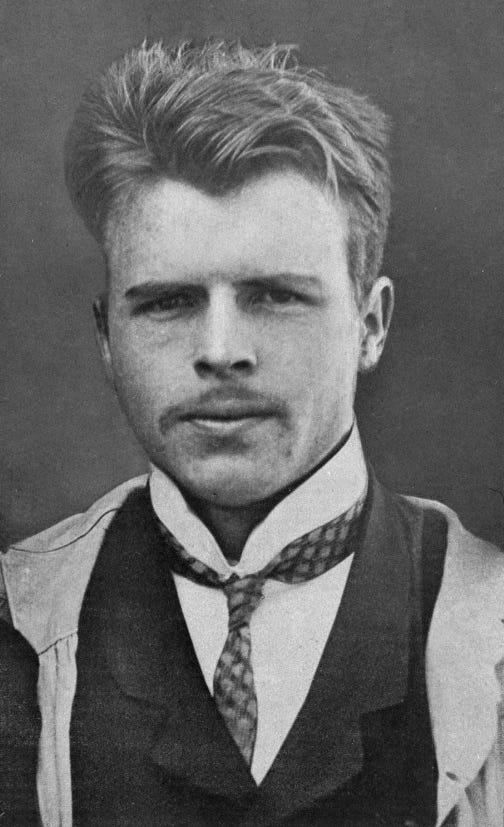
I can find a pattern if I want to. I can find a pattern in what my mother says today with Alzheimer’s. Do I hear the truth of her heart now when she says things that make me uncomfortable? Or is it just the disease?
As far as I know, the sounds birds make is gibberish, but it’s beautiful. Gibberish isn’t meaningless. Gibberish has whatever meaning I assign it. Almost all the lyrics on the Beatle’s White Album are gibberish, but they sound great, they make me happy, and they’re fun.
Ob-la-di, ob-la-da, life goes on, brah
La-la, how their life goes on
Ob-la-di, ob-la-da, life goes on, brah
La-la, how their life goes on

Paul McCartney / John Lennon
Writing gibberish is a way to write about things that are too hard to write about directly. Things that are too intense or too small and rendered insignificant in the transcription. Kierkegaard and Nietzsche both wrote a lot of gibberish, but if a pattern emerges for you, they’re both pretty mind blowing.
My mother is dying. Today I get to choose how I live and she does not. Her choices are mostly made for her. She can complain about her food or enjoy it. She can watch whatever my dad has on the TV or she can ignore it. I can never ignore it. I can’t turn my head away when a TV is on. I hope I never hear another TV again.
Virgil found meaning in how light reflects off the wine in a brass bowl. I found meaning in how my dog Margaret laid on the floor. Nothing has an innate meaning that we discover. We assign meaning to things. I get to use facts, feelings, and my memories to assign meaning to my mother, and the task is the same whether she’s alive or dead. I won’t be able to make new memories with my mother after she’s gone, though I can discover new facts or uncover new memories that change the meaning I’ve created. The light of memory travels at a constant speed. Now is always relative. I can be with her whenever I want by thinking about her.
I can’t play golf with my mom anymore. We can’t walk together anymore, either. She’s weak, and her balance is bad. It’s hard to have a conversation with her. She gets tired or loses the thread. But I can sit next to her on the couch. I can hold her hand while she sleeps. I find these things as satisfying now as I found playing golf with her before. The activities get smaller, but the meaning of them grows.
“Men, says an old Greek maxim, are tormented by the opinions they have of things, not by the things themselves. There would be a great point gained for the relief of our wretched human lot if someone could prove this statement true in every case.” — Montaigne

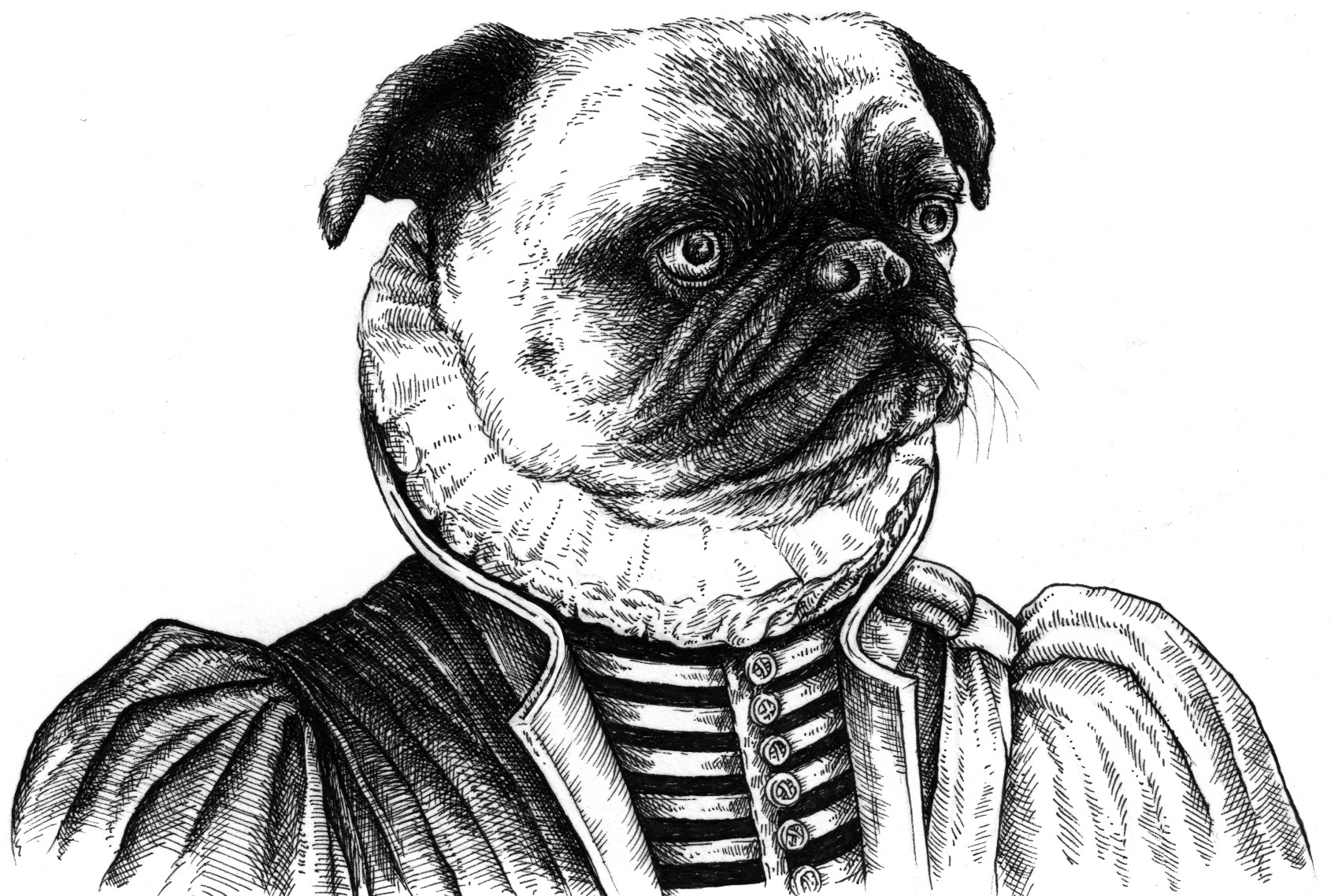
“My expression doesn’t change much, but it can mean anything you want.” — Margaret the Pug
I’m probably mangling this. I’m using characteristics of light for poetic purposes, so cut me some slack on the science. Feel free to school me in the comments. I’ll be grateful for any enlightenment.
This is one of, if not the best of your posts. Sad and happy at the same time.
Thank you Josh. Now I need Jon to comment so I can get special relativity right.