Cold Plate Club
Does the plate really need to be heated up for us to enjoy our scrambled eggs?

Conclusion first: I suppose in some restaurants or homes with staff, there was a time when a plate would be heated before it was served. This might be especially important for delicate foods like scrambled eggs. Maybe it’s still done, and I don’t notice, but my mom noticed, and it was enough to make her complain about an ice cold plate on which I’d served her some of my special scrambled eggs, the kind with either half-and-half or cream cheese in them. I couldn’t tell if her complaint was the truth of her heart or a lie placed there by her Alzheimer’s. At the time it didn’t hurt much. I shrugged it off. But I’m still thinking about it seven months later.
Alzheimer’s is a strange disease. I can’t tell if it exposes what was always there or if it creates something totally new. My dad thinks it’s the latter. He sees Alzheimer’s like a demon that possesses its victims. I see it as something that weakens inhibitions - like wine.
One time when I was visiting my mom and dad before my mom died, I made my mom some scrambled eggs for breakfast. On a previous trip she’d told me how much she liked my scrambled eggs. This time, when I served her the eggs, she complained that the plate I served them on was ice cold. It wasn’t. It just hadn’t been heated in the microwave before I put the eggs on it.
I complain about things like a cold plate, too. I recently got a massage. At one point during the massage I was thinking that the therapist wasn’t pressing hard enough, and that I made a mistake by selecting a female therapist. I didn’t ask her to press harder. I just thought about how my massage wasn’t everything I wanted it to be. That’s cold plate thinking.
What would it be like to be a massage therapist for someone who obviously didn’t enjoy their massage? A good friend recently gave me some great advice about people who can’t connect to their feelings: “That’s their problem. Don’t make their problem your problem.” But what if the person I can’t make happy is me?
I can learn a lot from a massage, like how hard it is to stay focused and experience my feelings rather than analyzing them, how distracting my mind is, and how it diverts me from my life. I have a real life I’m living and another life in my head, or maybe four other lives in my head. The real life is a lot more interesting. It’s so interesting I can’t put it into words.
I’m afraid of some feelings. Melancholy is familiar and comfortable, but grief is strange and vast. I spilled some coffee on a rug by my desk in the basement where I work. I used the technique my mother taught be to clean it up — get a dry paper towel and stomp on the mess to blot it up. Don’t rub because you’ll rub the mess into the carpet. She also recommended pouring club soda onto the stain to help lift it out. I didn’t do that. I never believed that did anything, even when I was a kid and used club soda when I was ordered to clean up after one of the dogs.
In her last year, my mother used to complain about something being stuck in her teeth. My dad bought all sorts of flashlights and tools to see into her mouth and get whatever the something was out. Often it was nothing. When I cleaned out her side of the bathroom after she died, I found drawers full of green plastic floss harps - a combination of dental floss and a toothpick. I don’t think any of them ever solved the problem.
In the shower most mornings I feel like I have something stuck in my teeth. I use the jet from the shower head to rinse out my mouth. Nothing is ever really there. But I fixate on the feeling of my teeth and become convinced something is there when it’s not. Then I shave or wash my face and forget about my teeth and the feeling goes away.

I’m avoiding the news right now. I haven’t written or read much Substack in weeks. Everything on Substack seems stale and monotonous. The same writers writing the same columns over and over. I get relief from poetry. I read some poems from Raymond Carver’s collection Ultramarine yesterday on the porch after Anna and I had a bad morning when she couldn’t get the charging cable disconnected from our new electric car for her 7 AM doctor’s appointment. There’s a lot in that sentence. The privilege inferred by owning an electric car. The money that comes with age. The health issues that also come with age that make you go to the doctor at 7 AM on a Tuesday. The burden of posessions, even nice ones. The injustice of complaining when you have it good.
“I can’t complain, but sometimes I still do.” — Joe Walsh
Carver is all about not having it good. He has many, many poems about sickness, debt, things breaking down. Then he has others about having it good. He gets sober. He wins awards. He’s so successful his relatives ask him for money. He has a tremendous poem about living in dread of the mail called The Mail I’ve quoted from below.
Remember this was written in the 70’s or the ’80’s, before the internet, when America was great.
On my desk, a picture postcard from my son
in southern France. The Midi,
as he calls it. Blue skies. Beautiful houses
loaded with begonias. Nevertheless
he’s going under, needs money fast.
The poem goes on for three more stanzas. The speaker hears from his daughter and mother. Things get worse. Then he has these two wonderful lines:
I go outside. Thinking to walk
to the graveyard for some comfort.
I am now of the age where the thought of the graveyard brings enormous comfort. I’m still going to die, someday, and escape the uncomfortable vibrations of this life, no matter who wins the election.
The poem ends this way.
But the sky is in turmoil.
The clouds, huge and swollen with darkness,
about to spew open.
It’s then the postman turns into
the drive. His face
is a reptile’s, glistening and working.
His hand goes back — as if to strike!
It’s the mail.
Another favorite poet of mine, Donald Justice, expresses the flip-side of Carver’s delusions about the reptile mail man in his poem “Epilogue: To the Morning Light” from his New and Selected Poems.
The poem begins…
“o light,
Strike out across the pasture
Where nightmare runs away now,
Unseating all her riders.”
It ends with these five lines.
“For only with your help shall
They come to see–and with no more
Than average daily terror–
All things for what they are,
All things for what they are.”
Average daily terror. It’s the mail. The email. The news. The phone alert. The waking up in the middle of the night and not being able to breathe. The 80 degree Halloween. The no rain for a month. Or maybe it’s just the altitude.
Anna and I recently went to Highlands, a resort community in the mountains of western North Carolina for the third week in October. That’s normally a great time to be there. This year it was two weeks after a major hurricane and three weeks after we put my mother in her grave. It was the first time in six trips where I had trouble with the altitude. I was snappy. Little things irritated me. I didn’t sleep well. I needed to change rooms at the resort. I couldn’t keep up on the hike. I woke up in the middle of the night and couldn’t breathe, sure I had to get off the mountain our rental house sat on top of. Maybe, if I’d just heated my plate in the microwave before I put the eggs on it, everything would have been perfect.
“I am so glad I have so few words. What a burden all those words are.” — Margaret the Pug
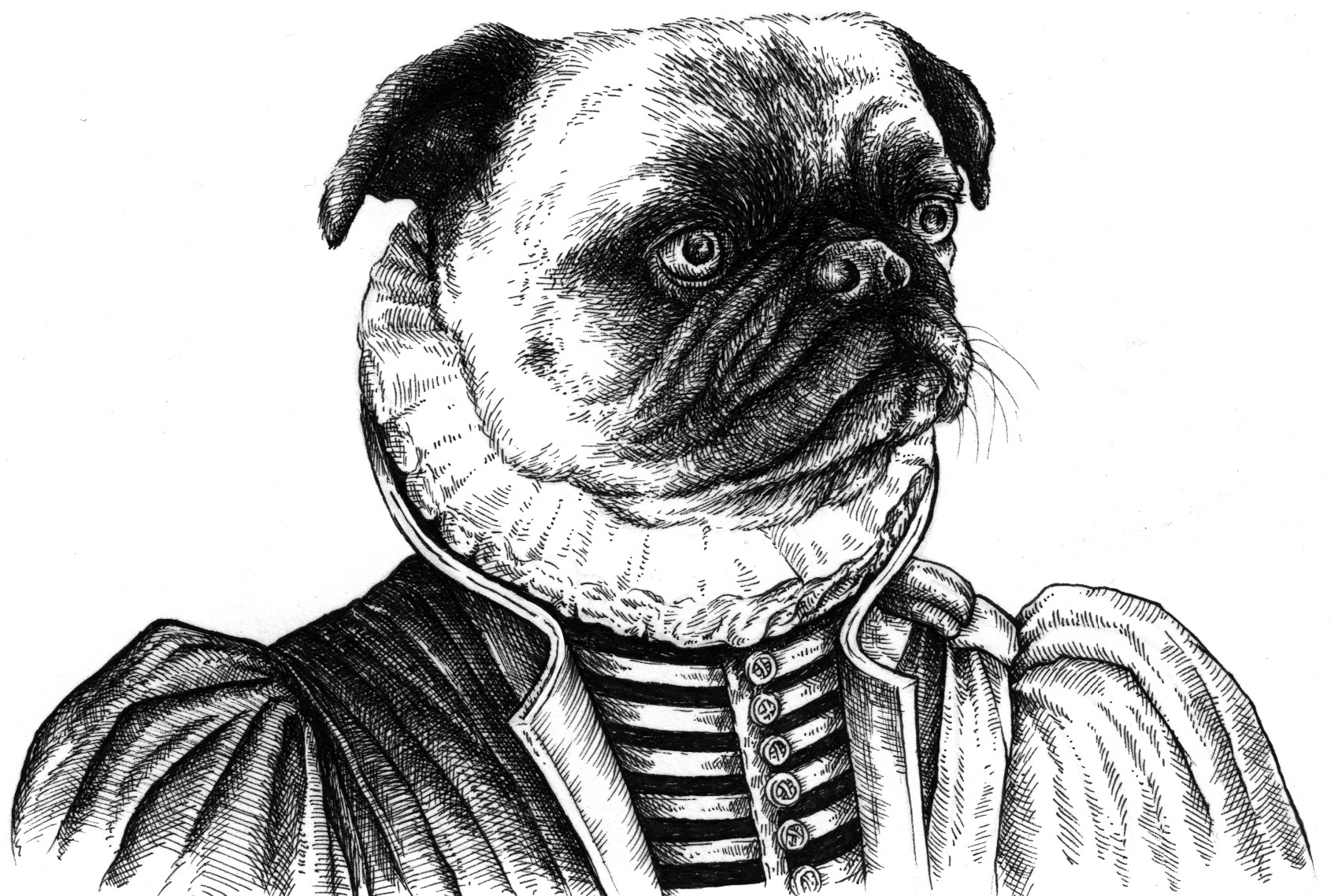
Here's to abandoning cold plate thinking.