How to be Good, or W.W.A.D.D. (What Would a Dog Do?)
Another excerpt from Dog Thoughts by Margaret the Pug, translated by Tom Noser

Note: The first part of this post was published on March 27. Then we messed up and forgot to publish the rest if it. So rather than make everyone go back and read the post from March 27 to understand what’s going on, we’re putting the entire chapter in this post. Dogs can write, but apparently they can’t read. Our apologies to everyone for the mix-up.
By Margaret the Pug
Translated by Tom Noser
My favorite phrase is “Good pug.” I can’t hear it enough. I like “good pug” better than “good dog” because good pug is about pugs. Good dog is fine, but good pug is better. There are many dogs but only a few pugs. I am one of the few, and I like it. I want Tom to learn what good means— good means “being like a dog,” and very good means “being like a pug.” When Tom acts like a pug, he will earn praise like “Good Tom” and maybe get a treat he can share with me.
Tom is doing the writing, but this is my book because I am doing the thinking. Because this is my book, I get to say what makes a good dog. A good dog doesn’t complain. A good dog is tidy and only makes messes where it should. A good dog takes a leash easily and does not disappear when it’s off a leash. A good dog loves everyone in its pack, but is friends with only a few. A good dog disciplines when necessary, helps when it should, and never helps or disciplines too much. A good dog lets other dogs struggle when the struggle is useful. A good dog is not afraid of its pain or the pain of anyone in its pack. A good dog does not cause pain unless the pain will protect someone in its pack. A good dog does what it must and what it enjoys and nothing else.
“It’s not easy to be good. If it were easy to be good, all dogs would be good dogs.” Me
I will show you how to know what to do to be good. Ask yourself three questions: Is anyone in the pack in danger? Am I in danger? What do I feel like doing? If the answer is “yes” to Is anyone in the pack in danger?, do whatever is necessary to remove the danger. If the answer is “no,” go to the second question. If the answer to Am I in danger? is “yes,” remove yourself from danger. If the answers is “no,” ask What do I feel like doing?, and do whatever you like. Do what you must, and do what you like, and don’t do anything else.
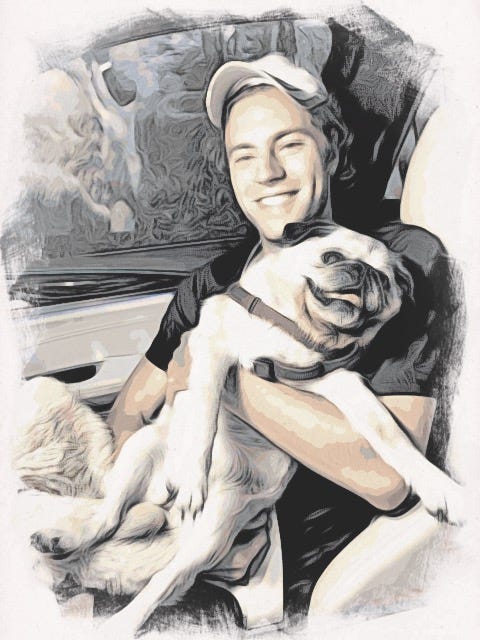
People don’t know what to do to be good unless dogs tell them what to do. People are very busy. Dogs are never busy. Being busy is doing things without knowing what you are doing. People stay busy because they cannot be still.
Editors note: below is the new stuff
Some of what people do when they are busy is worth doing, but not very much. I am glad to keep Tom company while he’s busy, and keeping him company is more important than anything Tom does while he’s busy.
You will not understand this next thing I say because it is very dog, but I will tell you anyway, and then I will say more later to explain. Here is the thing you will not understand: There is no you alone—there is only we together. You don’t exist apart. You are yourself and everything else at the same time. So there’s no reason to be lonely or feel sorry for yourself. Tom spends a lot of time sitting like I do, but he often feels sorry for himself, and I never do that. Tom is going to have to read this whole book to know how to be good. Being good will make him happy, and even if it does not make him happy, being good and unhappy is better than being bad and unhappy.
Keep reading with a 7-day free trial
Subscribe to Curious Animals to keep reading this post and get 7 days of free access to the full post archives.